Am zweiten Mai-Wochenende findet auf dem Gelände des Klinikums Konstanz unter der Themenstellung „Ceramic Implants – Game Changer in der Implantologie“ die 5. Jahrestagung der Internationale Gesellschaft für metallfreie Implantologie e.V. (ISMI) statt. Renommierte Referenten und die Teilnehmer werden an beiden Kongresstagen praktische Erfahrungen und aktuelle Trends beim Einsatz von Keramikimplantaten diskutieren.
Auch mit ihrer 5. Jahrestagung möchte die im Januar 2014 in Konstanz gegründete ISMI – International Society of Metal Free Implantology – wieder Zeichen auf einem besonders innovativen Feld der Implantologie setzen. Nach einer gelungenen Auftaktveranstaltung in 2015 und den erfolgreichen Jahreskongressen in Berlin 2016, Konstanz 2017 und Hamburg 2018 lädt die ISMI am 10. und 11. Mai 2019 erneut nach Konstanz ein.[content-banner]
Die zweitägige Veranstaltung beginnt am Freitag zunächst mit dem CAMLOG Pre-Congress Symposium, Seminaren und der Übertragung einer Live-Operation via Internet (geführte Implantation mit CERALOG in der ästhetischen Zone). Höhepunkt des ersten Kongresstages ist dann im direkten Anschluss die ISMI White Night (hedicke‘s Terracotta), bei der die Teilnehmer in entspannter Atmosphäre mit Wein und Musik den Tag ausklingen lassen können. Der Samstag steht dann ganz im Zeichen der wissenschaftlichen Vorträge. Die Themenpalette wird hier erneut nahezu alle Bereiche der metallfreien Implantologie umfassen. Wissenschaftlicher Leiter der Tagung ist der Präsident der ISMI, Dr. Dominik Nischwitz.
Hinweis: Es ist auch möglich, nur am CAMLOG Pre-Congress Symposium teilzunehmen. Interessenten nehmen diesbezüglich direkt mit dem Veranstalter Kontakt auf.
Das Programm zur 5. Jahrestagung der ISMI ist online als ePaper verfügbar. Die Anmeldung ist ebenfalls online möglich.
Informationen:
OEMUS MEDIA AG
Holbeinstraße 29
04229 Leipzig
Tel.: 0341 48474-308
Fax: 0341 48474-290
E-Mail: event@oemus-media.de
www.oemus.com
www.ismi-meeting.com
12.15 Uhr – CAMLOG Live-OP des Monats
Geführte Implantation mit CERALOG® in der ästhetischen Zone
Dr. Frank Maier, M.Sc.
Nach umfangreicher Blockaugmentation bei Nichtanlagen in Regio 12 und 22 ist die Insertion von zweiteiligen CERALOG® Hexalobe Zirkonimplantaten geplant. Nach Entfernung der Osteosynthese wird eine im Sinne des Backward Planning erstellte zahngetragene Schablone eingesetzt und das Implantatbett geführt aufbereitet. Nach erfolgter Implantation wird das kompromittierte Weichgewebe mit Bindegewebetransplantat verstärkt. Optional sollen die präoperativ erstellten individuellen Abutments und temporären Kronen eingesetzt werden. Jetzt registrieren!

Hinweis zu den Fortbildungspunkten: Für die Live-OP kann ein CME-Punkt erworben werden. Nachdem die notwendige Abspielzeit von 45 Minuten erreicht ist, werden die CME-Fragen für registrierte Nutzer freigeschaltet. Bei erfolgreichem Testergebnis können Sie dann das Zertifikat über einen CME-Punkt herunterladen.
The interview with Dr Sammy Noumbissi was published in the 1st issue of the magazine ceramic implants.
Dr Sammy Noumbissi has been practicing implantology for many years, specialising mainly on the use of ceramic implants. In 2011, Dr Noumbissi founded the International Academy of Ceramic Implantology (IAOCI), an organisation dedicated exclusively to ceramic and metal-free alternatives to metal implants. In an interview with Georg Isbaner, editorial manager of ceramic implants, the IAOCI founder and president spoke about how he entered ceramic implant dentistry and how he approaches titanium versus ceramic and future challenges.
Read the full interview in the ePaper.
The article from Dr Frederic Hermann, M.Sc., Switzerland was published in the 1st issue of the magazine ceramic implants.
Full-ceramic systems have been successfully established in the field of dental technology as well as in oral surgery.1 The necessity of being able to offer patients metal-free res- torations has continuously increased in recent years.2 …
Read the full article in the ePaper.
The new issue of ceramic implants – international magazine of ceramic implant technology – now available in print and as epaper – will keep you up to date with the newest developments in this promising field of implantology. The main focus of this issue is directed towards the two current, main topics of discussion which are on one hand the material and its processing characteristics and on the other hand the choice between one-pieced or two-pieced systems.

Detailed case reports and application examples will provide you with new ideas and solutions on what all is possible – enabling you to treat your patient even better. Discover the newest product developments in the section Manufacturer News and get an impression of the specialists’ points of view in our expert interviews. Research reports and details on the current state of discussion as well as upcoming events will give you further insight into this interesting market and the possibilities it offers.
The article from Dr Frederic Hermann, M.Sc., Switzerland was published in the 1st issue of the new magazine ceramic implants.
Patients are increasingly requesting ceramic implants. Reasons behind their decisions are often related to their emotions, as “white” implants mean smiles appear even more radiant and soft tissue looks even healthier. …
Read the full article in the ePaper.

Founded in 2014, the International Society of Metal Free Implantology (ISMI) held its 3rd annual meeting under the topic “Metal free implantology—Defining its position”. With more than 150 participants and speakers from eight countries and a broad programme, the society’s 3rd annual meeting, held on 5 and 6 May 2017 in Constance, Germany, was a total success. Participants were presented with a programme of seminars, various live surgeries as well as in-depth scientific lectures. On both congress days, international speakers and participants discussed their practical experiences and current trends regarding the use of ceramic implants. Following the recent IDS in March, the society’s 3rd annual meeting highlights once again, a particularly innovative area within the field of implantology.
The meeting started on Friday morning with pre-congress symposia and various live operations as well as seminars focusing among others on implant surgery and biological dentistry. The highlight of the first congress day was the ISMI White Night at Villa Barleben, where participants could end the day enjoying culinary specialities in a relaxed atmosphere. Saturday was entirely dedicated to scientific lectures. The range of topics being dealt with covered all areas of metal-free implantology, although the main focus was placed on practical experiences regarding the use of ceramic implants. In addition to such topics as implant design and questions concerning the materials’ characteristics, the lectures addressed in particular, the specific nature of bone and tissue regeneration as well as biological aspects. The discussions concluded that ceramic implants have become indispensable in modern implantology, and, based on aesthetic and biological considerations, they are the better alternative.
ISMI was founded with the aim of promoting and enhancing metal-free implantology’s innovative direction and pioneering approach within the field of implantology. In this context, ISMI supports its members by providing advanced training offers as well as regular specialist and market information. By reaching out to expert circles and patients alike, ISMI actively promotes the comprehensive establishment of metal-free treatment concepts. A particular highlight of this year’s meeting was the simultaneous broadcasting of live surgeries to the audience in Constance as well as to the German dental news platform zwp-online.info.
More Information:
OEMUS MEDIA AG
Holbeinstraße 29
04229 Leipzig
Tel.: 0341 48474-308
Fax: 0341 48474-290
event@oemus-media.de
www.oemus.com
by Dr Dominik Nischwitz
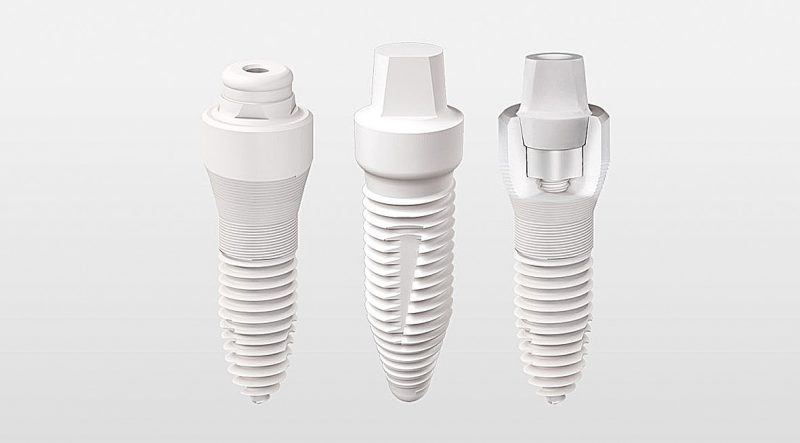
At present, ceramic implants (Fig. 1) are routinely used by only a few dentists: This is also evident in the small number of scientific studies compared to titanium implants. Therefore, the empirical facts resulting from the practical use of ceramic implants are particularly more important at this stage. The benefits of ceramic implants with regard to its biocompatibility, soft tissue reaction and the aesthetic result are now undisputed.
Ceramic implants react differently to conventional titanium implants. This poses the requirement to learn to “think in ceramic”. In this context, both the nature and biology of the body as well as the basic principles of immunology and biochemistry as well as bone and tissue regeneration are very important. Unlike titanium implants, ceramic implants only heal in absolutely healthy bone. The body recognises them as neutral and osseointegrates them during the bone regeneration phase. By comparison, titanium implants heal by means of inflammatory activation. Local inflammatory mediators remain constantly active depending on how prone the patient is to inflammation (high/low responder). To successfully insert ceramic implants, there are important basic rules to follow.
Systemic preparation for the operation (obligatory)
The Bone Healing Protocol (BHP® according to Dr Dominik Nischwitz) has proven effective for the perioperative support of bone regeneration and is used ahead of all surgical procedures to support the body’s own regeneration. At least 14 days prior the planned operation, it is crucial that the nutrients are consumed precisely according to this protocol. Poor nutrition with too much sugar, wheat and cow’s milk products as well as a lack of sunlight depletes the body of important vitamins and minerals: mainly vitamin D3 (lack of sun), zinc, magnesium and omega-3 fatty acids. This deficiency frequently causes the body to become overwhelmed with healing processes—it is almost in a state of “hibernation” and is not able to build new tissue as the nutrients to do so are simply not there.
Therefore, the patient’s diet, at least at this stage, should be as hypoallergenic and nutritious as possible. Common nutritional allergies and all compromising food additives are to be strictly avoided so that the immune system can concentrate on its most important task of constructing bone- and soft-tissue. A gluten and cow’s milk-free diet is recommended. Alcohol, tobacco and caffeine should be kept to a minimum and sugar, sweeteners, flavor enhancers, trans fats and other compromising food ingredients and additives should be completely avoided. Proteins, healthy fats and vegetables should be consumed. It is also important for the patient to drink plenty of fluids (daily consumption of 2 to 3 litres of still water).
Bone quality
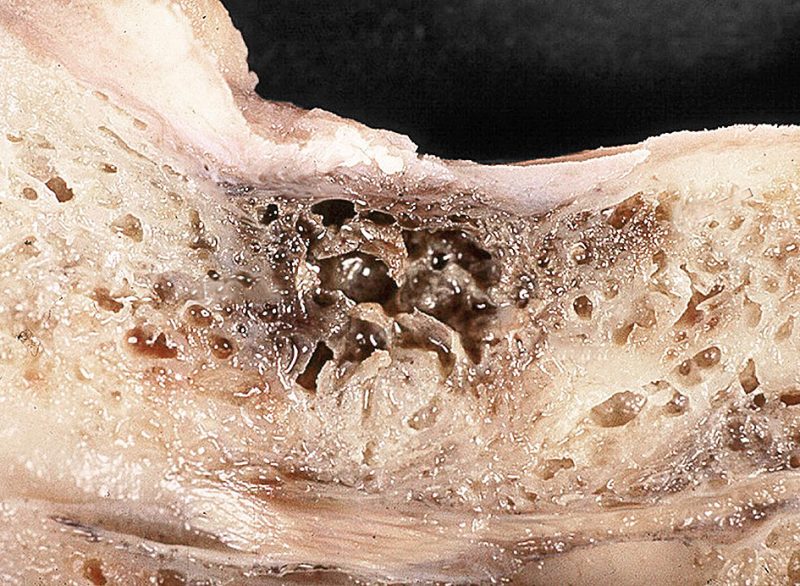
According to university doctrine, there are four bone density categories that classify the ratio of mineralised bone substance to bone volume. As our experience has shown, bones classified as category 3 and especially 4 are defective or even diseased (Fig. 2).
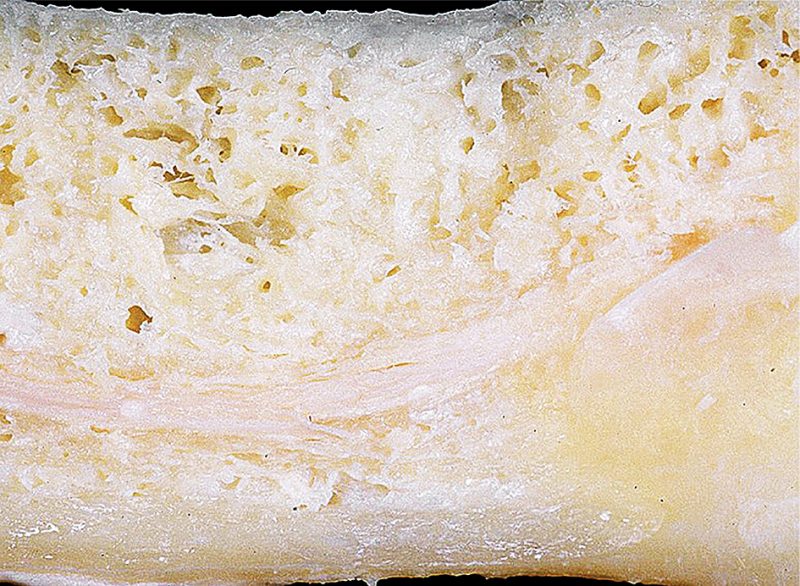
Every implantologist knows the phenomenon of “falling” into cavities while drilling. Chronic inflammations in the jaw bone frequently occur as result of wounds caused by tooth extractions in the past, which have not healed properly, tooth development or foreign particles. These inflammations are often not visible on conventional X-ray images. Similar to root-treated teeth, inflammatory mediators (TNF-, IL-1, RANTES) can also cause symptoms in other parts of the body. Neurological (NICO) or joint problems frequently occur. NICO stands for “neuralgia-inducing cavitational osteonecrosis”, which refers to chronically inflamed areas in the jaw bone. This osteolysis is also referred to as ischemic necrosis, a typical interference field in the jaw, which is also included in the category of neuromodulative triggers. Ceramic implants do not heal in bones of category 3 or 4. For this reason, osteolysis needs to be treated before implantation can occur. The bone must be absolutely healthy to ensure a successful implant healing (Fig. 3). The development of osteolysis is caused by a lack of nutrients as stated above.
Disinfection and plasma membrane
These osteolytic areas of bone contain fat cysts, degenerated trabeculae and allow chronic infections, particularly anaerobes, to feel at home in this area, triggered by the ischemic change in the bone. According to studies conducted by Lechner, increased heavy metals and other environmental toxins become deposited here. This bone area must therefore be cleaned and disinfected during implantation with the utmost precision.
Conditions for ideal bone healing:
The bone must be hard. There must be no “yellow bone”. The blood must be clear (no drops of grease or “foamy” blood).
In addition to implant drilling, piezosurgery has proven to be successful in order to remove diseased bone.
Osteolysis frequently affects the N. alveolaris inferior or the upper jaw up to the sinuses—the piezoelectric technique allows the dentist to carry out procedures even in critical areas, since due to the use of rotating instruments soft tissue injuries are unlikely to occur.
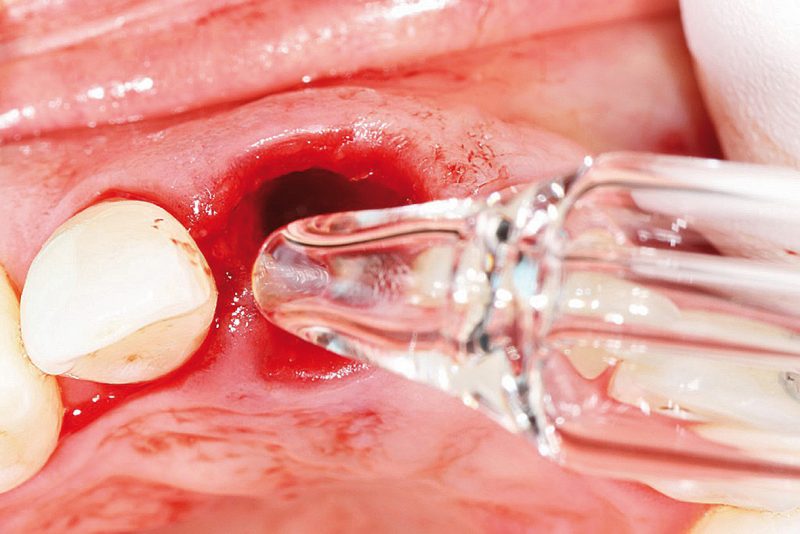
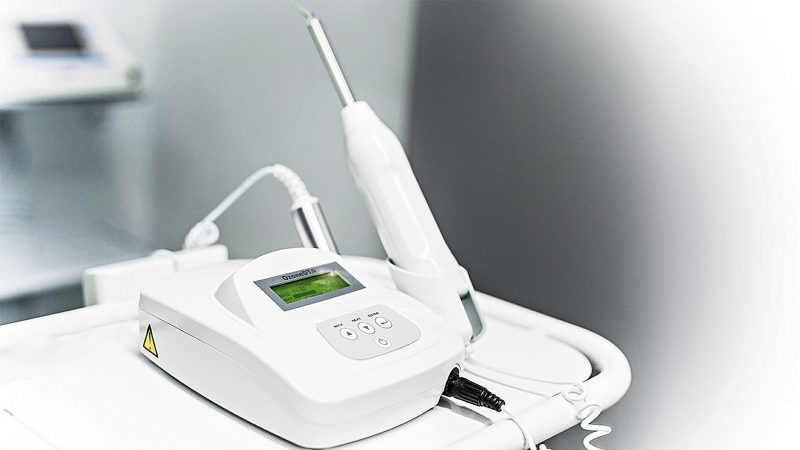
For disinfection we recommend ozone (Fig. 4). Ozone is a proven bactericide, virucide and fungicide. It therefore kills all microorganisms present. This facilitates healing as the immune system does not need to deal with additional infections. The use of ozone is indicated particularly after root-treated teeth have been extracted and ceramic implants have been immediately inserted (SCC® Short Cut Concept according to Dr Karl Ulrich Volz). In addition to the ozone production, the voltage formed in the glass vial (OzoneDTA; Fig. 5) stimulates bleeding.
Plasma (A-PRF™, PRGF®, etc.): In the author’s practice, inserting a plasma membrane (PRGF® or Choukroun A-PRF™; Fig. 6) gained from the patient’s own blood has proven to be effective. The blood is freshly extracted from the patient’s vein, centrifuged for around eight minutes and then activated (PRGF®). After 15 to 30 minutes, the membrane is ready for insertion. The plasma membrane technology is 100 per cent autologous and therefore completely biocompatible.
Combined with ozone therapy, plasma membrane insertion is a key part of all surgical procedures in our practice and is used after tooth extraction, in implants, for bone formation and as an insert following NICO removal. When using endogenic membranes, the regeneration of bone- and soft-tissue is phenomenal.
The whole protocol should be followed before and after every tooth extraction and must be followed for every surgical procedure on the bone. Thanks to this procedure, dry alveoli belong to the past.
Neural therapy and infusions
To further support the body’s own regeneration, the alveolus is rinsed with procaine after disinfection and then infiltrated with Traumeel in the vestibulum. Procaine is an anti-inflammatory local anaesthetic that stimulates blood circulation at the site. This ensures clean bleeding following the vasoconstringent of the anaesthetic. Furthermore, additional medication can be used: Notakehl (homeopathic antibiotic), Selenium (orthomolecular antibiotic) and Arthrokehlan “A” (“antitoxin”).During larger operations, such as a sinus lift, infusions are used on a routine basis: The combination of “single shot” antibiotics and cortisone (dexamethasone) has proven effective even at the operation day. The positive properties of antibiotics are used—which are basically prevention of infection—without the side effects caused by the oral intake (e.g. increased stress on liver and intestine).
Furthermore, the immune system is supported by a high dose of vitamin infusions administered intravenously as part of the surgical and ozone treatments.
Properties of ceramic implants
In addition to the numerous benefits of ceramic implants compared to titanium implants, there are also certain special features and even disadvantages. For example, ceramic implants do not dissipate heat. During the operation, it is thus extremely important for the surgeon to use the bone properties at the site for orientation. Unlike titanium implants, ceramic implants should be inserted with regard to the bone categories. Ceramic implant surgery therefore requires good intuitions. While category 1 bone (extremly hard with little blood circulation) must be prepared oversized in order to create cavities for subsequent callus formation, soft bone can be prepared undersized. Once ceramic implants are osseointegrated, the rules for the prosthetic build-up are more sensitive than those for titanium implants. Due to material properties, titan implants show a lower ductility and can therefore better compensate occlusion and articulation particularly in case of slight deflections. In contrast, ceramic implants are securely fixed in the bone and cannot be moved. Solitary ceramic implants should therefore be milled in minimal infraocclusion and without any articulatory contacts.However, this lack of mobility is also a major advantage of ceramic implants. Against university doctrine, one millimeter bone around the implant is no longer necessary for ceramic implants. As long as the ceramic implant is primarily stable, it will heal. This poses the requirement to learn to “think in ceramic”: This simply means that those areas of the implant that are completely surrounded by bone form the actual implant and those areas where periosteum or gingiva is fixed around the implant form the abutment. Since the periosteum and gingiva creepingly attach to the ceramic, completely new methods of ceramic implantology are possible. There is no attached gingiva to titanium or other metal abutments. Therefore, a ceramic abutment is the absolute standard even in usual, titanium-based implantology.
Patient case
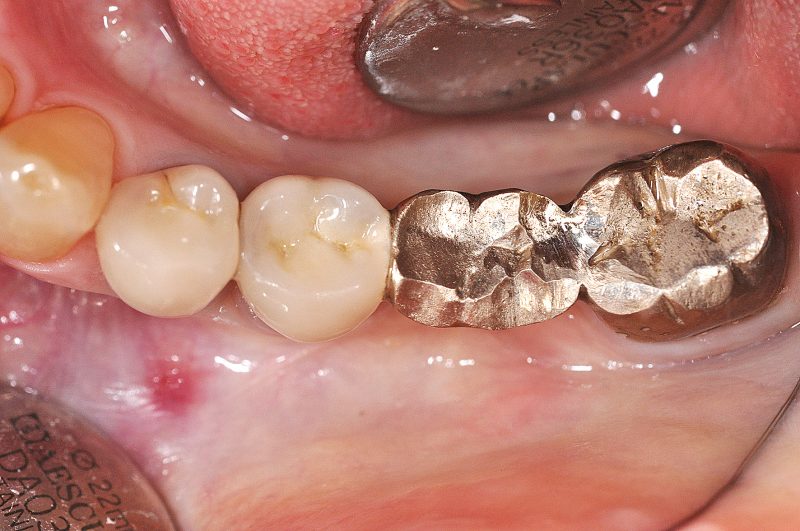
In early October 2016, a patient presented with prosthetically and conservatively insufficiently restored adult dentures. A bridge region 34 to 37 (Figs. 7–9) was in especially high need of renewal and the devitalised tooth 37 exhibited apical alterations in the form of radicular cysts (Fig. 10). These teeth were not viable for another prosthetic restoration due to their deficiencies. The apical findings in region 35 and 37 were confirmed by the CBCT, verifying the clinically noticeable pressure pain in region 35 and occlusal pain in region 37. Patient and dentist agreed on immediate implantation with two-piece ceramic implants as an ideal form of socket preservation. Immediate implantation can thus be achieved in spite of chronically apical inflammation.
In cases such as this, the perioperative preparation of the patient is decisive. Two weeks ahead of implantation, the patient’s physiological constitution and metabolism are primed for bone- and soft-tissue regeneration by a selection of nutrients (BHP® according to Dr Nischwitz). The patient’s immune system is optimally prepared. During surgery, the alveolus must be thoroughly cleaned and disinfected, as ceramic implants only become incorporated in healthy bone. For disinfection, ozone is used. Periodontal fibres and any granulation or cystic tissues must be removed completely. The implant can be viewed as the “bonus on top”, supporting the whole alveolus when inserted primarily stable. In this case, the author opted for two-piece ceramic implants in order to prevent any tongue pressure and to allow for absolute rest during healing. This surgical procedure can be standardised, has a high success rate and is both painless and minimally invasive—the results speak for themselves (Figs. 11–14).
Conclusion
Ceramic implants, particularly immediately inserted ones (SCC®—Short Cut Concept according to Dr Karl Ulrich Volz), offer huge advantages over titanium implants. While immediate titanium implants, particularly in the posterior region, are only possible in a few cases, immediate implantation with ceramic implants is possible in almost all cases of tooth extraction. Therefore, immediate implantation with ceramic implants is the gold standard, provided a strictly followed protocol. If both the systemic support of the bone and tissue regeneration are well-functioning, the dentist is working carefully and the alveolus is disinfected properly and precisely examined for isolated osteolysis, ceramic implants are ideal for socket preservation. It then works almost like a plug. Since the alveolus is smaller than the implant, the wounded area, which has to heal, is also smaller. At this stage, endogenic regenerations processes in bone and tissue are working at full power. Particularly with regard to aesthetics, immediately inserting ceramic implants is the ideal time to operate according to the author. With a success rate of over 90 per cent, complicated immediate implants can also be carried out as routine in the posterior region in most cases.
Following this procedure means that the patient does not require an additional implantation appointment, the bone- and soft-tissue are immediately supported and—in addition to the significantly more efficient process for patient and dentist—the immediate implantation is generally completely painless.
contact
Dr Dominik Nischwitz
Specialist in Biological Dentistry
and Ceramic Implants
DNA Health&Aesthetics
Heerweg 26
72070 Tübingen, Germany
Tel.: +49 7071 975977
info@dnaesthetics.de
dnaesthetics.de
The article from Dr Sofia Karapataki was published in the 1st issue of the new magazine ceramic implants.
Zirconium is a metal with the atomic number 40. Zirconium dioxide (ZrO2) or Zirconia is a ceramic material without any metal properties. It is electrochemically inert causing no galvanising or electro current disturbance effects at an inter- and intracellular level. It is the most bioinert and biocompatible material currently available in the market, with no detected allergies or intolerances. …
Read the full article in the ePaper.

ceramic implants – international magazine of ceramic implant technology is the newly published english-speaking special magazine of OEMUS MEDIA AG. Released in autumn 2018, ceramic implants is to be understood as an independent platform for the international know-how-transfer about ceramic implantology and metal-free implantology.
For 40 years, titanium implants have proven to be suitable as dental implants. Although the beginnings of dental implantology had been metal-free, ceramic implants in those days did not meet the required standards with regard to stability. Today, zirconia is an approved implant material whose properties in stability, osseointegration and prosthetic compatibility are increasingly meeting the standards set by titanium implants. Moreover, the demand for highly aesthetic, tissue-friendly, antiallergic and metal-free zirconium is growing, especially due to an annually increasing number of titanium intolerances caused by the large-scale application of titanium oxide in cosmetic products and pharmaceuticals. For these reasons, market experts estimate that the share of zirconia implant in the dental implant market will rise to 10 or even 25 per cent.
Taking these developments into account, OEMUS MEDIA AG will publish its first edition of ceramic implants in October 2017. This special edition of implants international magazine of oral implantology will update readers on the most current status of metal-free implantology, through case and scientific studies as well as concise product and market information; in addition, special attention will be given to international specialist congresses and symposia. ceramic implants will be distributed directly to 8,000 recipients (subscribers of implants international magazine of oral implantology) in more than 100 countries as well as at international dental shows and congresses. Moreover, its e-paper version (www.oemus-shop.de/publikationen/ceramic-implants-engl) will be available at all times and free of charge.
Starting 2018, ceramic implants will be published twice a year. ceramic implants international magazine of ceramic implant technology will be published in English.
Read now the new issue as ePaper.

OEMUS MEDIA AG
Holbeinstraße 29
04229 Leipzig
Tel.: +49 341-48474308
www.oemus.com